Posts

Carbon fiber fuselage with 8m seams can be CO2 laser welded

Image
European researchers  say they have successfully welded two halves of an 8-meter-long fuselage made of carbon-reinforced fibers with a CO2 laser. This means that ultralight passenger aircraft can be manufactured using this method.   The demonstration, completed by a large international consortium led by Airbus and comprising several Fraunhofer institutes, provides proof of concept for the chipless connection of carbon fiber-reinforced thermoplastic (CFRTP) component structures with a CO2 laser. Dynamic Beam Shaping Working under the Multifunctional Fuselage Demonstrator (MFFD) project, which is part of the EU's wider Clean Skies 2 research program, the team at the Fraunhofer Institute for Materials and Beam Technology (IWS) in Dresden says the novel construction method and process will significantly reduce weight, material and time. The novel construction method and process will significantly reduce weight, material, and time.   They used a CO2 source to weld long seams ...

Laser seam tracker + welding robot realizes intelligent welding

Image
 With the continuous development of the manufacturing industry, the application of automation technology in the welding field has become increasingly popular. Welding is an indispensable part of the manufacturing industry, and its level of automation and intelligence is directly related to product quality and production efficiency. As advanced welding auxiliary equipment, the MRJ laser welding seam tracker can be adapted to most welding robots on the market, achieving breakthroughs in intelligent welding and bringing revolutionary changes to many industries. MRJ Laser Weld Seam Tracker uses laser sensors to perform non-contact measurements of weld seams. Detecting and tracking the weld seam position in real-time, ensures the accurate alignment of the weld seams during the welding process, thereby achieving high-quality welding. Its principle mainly includes key steps such as laser emission, weld seam identification, and tracking control. The laser beam is emitted by the laser trans...

120W high peak MOPA laser is a powerful tool for glass drilling and texturing

Image
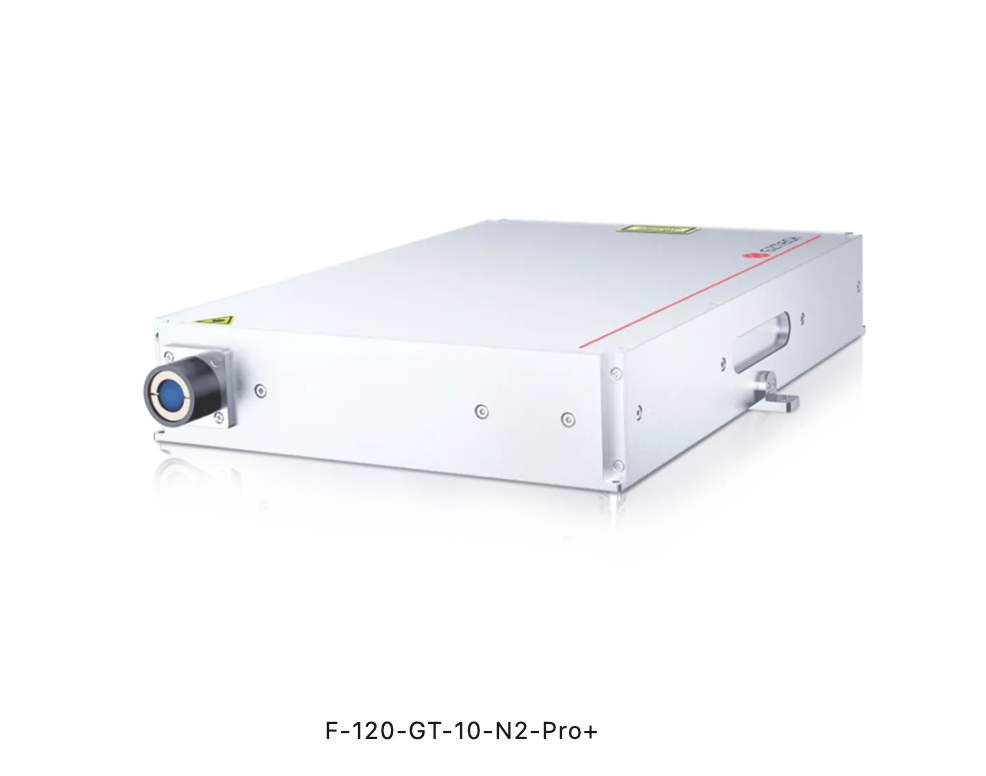
With the advancement of science and technology and the accelerated pace of transformation and upgrading of the manufacturing industry, the glass deep processing industry, as an important part of modern industry, has put forward higher requirements for precision processing, efficient production, energy conservation, and environmental protection. As an innovative pioneer in the field of laser technology, GZ laser tech actively responds to market demand and creates a new high-peak MOPA laser----[F-120-GT-10-N2-Pro+] The peak power of fiber pulse laser has long been in the order of 10kW and is widely used in marking metal materials. For hard and brittle materials such as glass that are difficult to process, breaking the peak limit of nanosecond fiber pulse laser has always been the direction pursued by fiber MOPA pulse technology. GZ laser tech 120W high peak GT-Pro+ laser adopts a self-designed amplifier scheme and electronic control scheme, which greatly increases the peak power of singl...

Laser Welding in X-pin Windings

Image
Flat wire motors, as a kind of new energy vehicle drive motors, are more in line with the development trend of lightweight and integration of new energy vehicles by their compact size and high power efficiency. Therefore, with the prosperous development of the new energy vehicle market, the electrification rate of new energy vehicles , and the increasing proportion of dual-motor models, the industry demand for flat wire motors is growing explosively.   Compared with round wire motors, flat wire motors have the advantages of high slot fullness, high power density, high efficiency, etc. They can also achieve the characteristics of small size, high efficiency, strong thermal conductivity, low-temperature rise, and low noise. According to relevant data, flat wire motors are 10% more energy efficient than round wire motors. The continued prosperity of the new energy vehicle industry demands, that the market penetration of flat wire motors continues to accelerate. This will bring a doubl...

Laser Intensity Noise Measurement

Image
Since laser intensity noise often sets the performance limits of experiments, it is important to characterize it for good results. Low noise, high sensitivity photoreceivers are invaluable when making such measurements. Optical receivers provide an ideal solution for this application. They combine scatter-grain noise-limited performance, high conversion gain, and wide bandwidth to make noise measurements easy to perform.   Figure 1 shows a typical setup for measuring laser intensity noise. The laser output is attenuated to unsaturate the photodetector and focus it onto the photoreceiver. It is important to ensure that the photodetector is not overfilled. This can lead to undesired noise coupling as mechanical vibrations cause the photodetector to see varying amounts of laser light. These acoustic frequencies will give false peaks in the amplitude noise spectrum.   The output of the photodetector is then sent to the spectrum analyzer. It is very common for the equivalent input ...

Understanding Laser Power Density and Energy Density

Image
Power and energy density are two important concepts to understand when dealing with laser optics. These two terms are often used interchangeably but have different meanings   In most scientific disciplines, including chemical and electrical engineering, "power density" and "energy density" usually describe three-dimensional volumes. However, in the optical sciences, these terms are usually used to describe two-dimensional regions unless they are described as "volumes". Power density, energy density, fluence, and irradiance are often used interchangeably in the optical industry, which can be completely inaccurate, especially when it is not clear whether the metric is a 2D or 3D value. This is particularly important for laser cutting and welding applications, where the depth of laser penetration must be considered, rather than simply touching a surface. Volume values are often more applicable in these situations and are an important distinction that must be...

History of Lasers

Image
  Lasers have been hailed as one of the great inventions of the twentieth century, following nuclear power, computers, and semiconductors, and have brought about a great technological breakthrough for mankind. The laser radiation produced by lasers is famous for being the "fastest blade", the "most accurate ruler" and the "brightest light". Nowadays, laser technology plays an important role in many fields such as medicine, the military industry, communications, and so on.   The birth of the laser is the result of the tireless efforts and arduous exploration of many scientists.   In 1917, Albert Einstein proposed the concept of "stimulated radiation", which laid the cornerstone for the theoretical foundation of lasers.   Although the theory of lasers had already been proposed at that time, the actual preparation of lasers was quite challenging. By the 1950s, with the progress of photon and microwave technology, the manufacture of an oscillator cap...